Showing posts with label Gospels. Show all posts

Thursday, 4 October 2012

Chronological Snobbery and the Resurrection of Jesus

When discussing the historical basis for the resurrection, one often encounters a popular misconception that the ancient world was far more gullible about claims of resurrection than people are today. This common presumption amounts to what C.S. Lewis called “chronological snobbery.” People imagine that, while our post-enlightenment modern world treats claims of resurrection with doubt and skepticism, the ancient world — being full of superstition and credulity abut the supernatural — would have been poised to accept such a claim.

This discredited notion is addressed by N.T. Wright in his book The Resurrection of the Son of God, in which he surveys the (Jewish and non-Jewish) ideas concerning resurrection and the afterlife in the first-century Mediterranean world. He shows that the unanimous view in both the Jewish and non-Jewish cultures was that bodily resurrection wasn’t possible. From the point of view of Greco-Roman ideas, the physical world is seen as being defiling and corrupt, while the spirit or soul was considered good. Within Judaism, there were two major sects — the Sadducees and the Pharisees. The former rejected all notions of an afterlife and resurrection, while the latter believed that there would one day come a general resurrection at the end of the world — but this precluded the possibility of someone rising bodily from the dead to glory and immortality in the middle of history, before this general resurrection at the end of time. As Timothy Keller explains in his book The Reason for God (p. 205),
 “The idea of an individual being resurrected, in the middle of history, while the rest of the world continued on burdened by sickness, decay and death, was inconceivable. If someone had said to any first-century Jew, ‘So-and-so has been resurrected from the dead!’ the response would be, ‘Are you crazy? How could that be? Has disease and death ended? Is true justice established in the world? Has the wolf lain down with the lamb? Ridiculous!’ The very idea of an individual resurrection would have been as impossible to imagine to a Jew as to a Greek.”
We can also show historically from a number of sources that people in the ancient world had a hard time buying the resurrection story. Consider the late second century Christian writer Theophilus of Antioch. In book 1 (chapter 13) of his apology to Autolycus, he addresses this skepticism:
“Then, as to your denying that the dead are raised — for you say, “Show me even one who has been raised from the dead, that seeing I may believe,” […] But, suppose I should show you a dead man raised and alive, even this you would disbelieve. God indeed exhibits to you many proofs that you may believe Him. For consider, if you please, the dying of seasons and days and nights, how these also die and rise again. And what? Is there not a resurrection going on of seeds and fruits, and this, too, for the use of men? A seed of wheat, for example, or of the other grains, when it is cast into the earth, first dies and rots away, then is raised and becomes a stalk of corn. And the nature of trees and fruit-trees, — is it not that according to the appointment of God they produce their fruits in their seasons out of what has been unseen and invisible?”
There is a similar passage in Clement of Rome’s epistle to the church of Corinth (1st Clement 24), written most likely in the mid-90’s A.D.:
“Think, my dear friends, how the Lord offers us proof after proof that there is going to be a resurrection, of which He has made Jesus Christ the first-fruits by raising Him from the dead. My friends, look how regularly there are processes of resurrection going on at this very moment. The days and the night show us an example of it; for night sinks to rest, and day arises; day passes away, and night comes again. Or take the fruits of the earth; how, and in what way, does a crop come into being? When the sower goes out and drops each seed into the ground, it falls to the earth shriveled and bare, and decays; but presently the power of the Lord’s providence raises it from decay, and from that single grain a host of others spring up and yield their fruit.”
Finally, the second century apologist Justin Martyr, in his first apology (chapter 19), also addresses the believability of the resurrection. He writes thus:
“And to any thoughtful person would anything appear more incredible, than, if we were not in the body, and some one were to say that it was possible that from a small drop of human seed bones and sinews and flesh be formed into a shape such as we see? For let this now be said hypothetically: if you yourselves were not such as you now are, and born of such parents [and causes], and one were to show you human seed and a picture of a man, and were to say with confidence that from such a substance such a being could be produced, would you believe before you saw the actual production? No one will dare to deny [that such a statement would surpass belief]. In the same way, then, you are now incredulous because you have never seen a dead man rise again. But as at first you would not have believed it possible that such persons could be produced, so also judge ye that it is not impossible that the bodies of men, after they have been dissolved, and like seeds resolved into earth, should in God’s appointed time rise again and put on incorruption.”
Such statements should give us cause to re-consider whether the ancient world was as gullible and credulous as we are often led to think.

Monday, 20 August 2012

Oral Tradition, the Gospels and Justin Bieber

Some people struggle to understand how oral tradition could have accurately maintained the gospels before they were written down [assuming from what we know thus far], especially so and sometimes understandably from a western culture where information is passed on most commonly in literary form and not orally. I was given a perfect example of one of the many strengths of oral tradition within an oral culture yesterday when discussing with a friend about his problem with a specific line in a song that he felt was inappropriate. People at his church are used to singing that song the way it is, and more than likely enjoy it the way it is, the appropriateness of the line is not what's important here, its that if that line was changed nearly everyone would have noticed.

Justin Bieber


To use a more popular contemporary example I'll use a Justin Bieber song, say perhaps his popular hit baby featuring Ludacris. Now the popular chorus in that song is;

Baby, baby, baby, oh
Like baby, baby, baby, no
Like baby, baby, baby, oh
I thought you'd always be mine, mine

Now Justin Bieber has millions of fans all over the world who love him [each to their own] and sing his songs, know his song lyrics and all the dances. Imagine...I know its hard ..that a group of Justin Bierber fans met together weekly to talk about their love for him and would make a habit of singing his songs together as a group. But imagine this time someone in the group or a pair started to sing different lyrics and instead of the above sang instead;

Maybe, maybe, maybe, so
Like maybe, maybe, maybe so
Like maybe, maybe, maybe yo
You said you wouldn't mind, mind

Now we all know those bieberites would be on this like a honey badger would defend its kit [Baby honey badger]. They would in no uncertain terms let those who had changed what had been passed onto them through listening to the source of the lyrics that what they were repeating was incorrect. The strength of oral tradition is that the community protects the tradition [song lyrics in this case] from being changed because so many people are aware of what was faithfully passed onto them. The more people that know something the better it can be protected from change especially so in oral cultures where the information wasn't passed on in isolation but as part of a community.

What does this mean for the Oral Tradition of the Gospel?


In the same sense that the song lyrics are maintained, the gospels would have been passed on, memorised and protected by their community from change and especially so since they believed they were guarding and passing on Gods word. Remembering that unlike today where we rely on books and email to pass on and remember vital information. The first century Jewish community would have been highly proficient in the practice of retaining large amounts of oral information using specific mnemonics [memory aids] such as repeating something a certain amounts of times, and using music or rhyme which allowed many of the Rabbis and their students to eventually learn amounts of information we would today think almost impossible. In fact many of the devices used during that time are what many people spend thousands of pounds on at memory seminars to improve their memories today.

It should also be highlighted that that the community was not exclusively oral but was primarily so. The importance of highlighting the accuracy of oral tradition is important because many people today assume that because the gospel accounts were not written down for 25-60 years after Jesus death they must not be accurate. However as the example above demonstrates there are in fact some benefits to oral tradition that help to protect the message from change and actually perhaps have some merit over that of its written form.

Thursday, 28 June 2012

Alleged Historical Errors in the Gospels of Luke and John (Tim McGrew)

When Did John Write His Gospel?


A number of significant events occurred in the life of the church in the decade of the A.D. 60's. Among them was the great fire of Rome which broke out in A.D. 64, resulting in Nero cracking down on Christians, thus greatly exacerbating the perseuction of the early church. This intense persecution would would last centuries, before finally coming to a close with the edict of Milan in A.D. 313.

Regarding the great fire of Rome, Roman historian Cornelius Tacitus, in his Annals, recounts that rumours arose that the fire was the result of an order from the Emperor Nero himself. Tacitus writes that Nero consequently "fastened the guilt and inflicted the most exquisite tortures on a class hated for their abominations, called Christians by the populace." Indeed, many of the early followers and disciples of Jesus were martyred as a result of this crack-down. Even as early as the late first century, Clement of Rome writes of the martyrdom of the apostles Peter and Paul, saying (1 Clement 5),

"Let us set before our eyes the illustrious apostles. Peter, through unrighteous envy, endured not one or two, but numerous labours and when he had at length suffered martyrdom, departed to the place of glory due to him. Owing to envy, Paul also obtained the reward of patient endurance after being seven times thrown into captivity, compelled to flee, and stoned. After preaching both in the east and west, he gained the illustrious reputation due to his faith, having taught righteousness to the whole world, and come to the extreme limit of the west, and suffered martyrdom under the prefects."
The second major event was the war of the Jews from A.D. 66 to 70, culminating in the siege of Jerusalem in A.D. 70 by the army of the future Roman emperor, Titus. Famously, the city of Jerusalem was sacked and the building of the second temple was completely raised to the ground.

What is surprising about the New Testament is that there is no indication that any of these major events had taken place at the time of their writing. It seems reasonable to suppose that, had the gospels or Acts been written after those events had taken place, there would be some indication. Indeed, the book of Acts ends with a cliffhanger whereby the apostle Paul is placed under house arrest. The persecution under Nero, and Paul's death in the mid to late 60's is not mentioned.

I have argued previously that the omission of these events from the book of Acts in particular suggests that Acts was written in the early 60's and that Luke's gospel precedes this date. But what if there was internal indication to suggest that the temple was still standing at the time the gospel narratives were penned?

It is generally thought among contemporary scholars that John's gospel was the last to be written, and that John likely wrote it at the close of the first century, possibly in the 90's AD. But is it possible that John wrote his gospel prior to this time? Take a look at John 5:2:
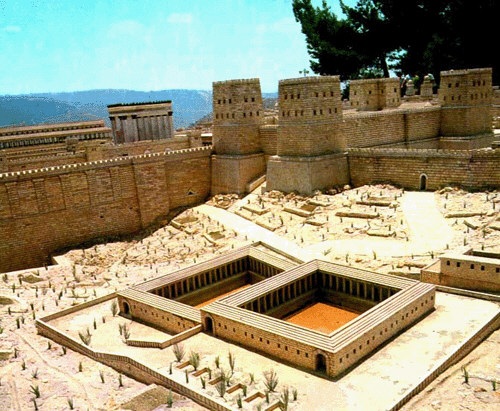
"Now there is in Jerusalem by the Sheep Gate a pool, in Aramaic called Bethesda, which has five roofed colonnades."
These collonades, along with the rest of the temple, were destroyed by the Romans in A.D. 70. Could this suggest that John's gospel was written considerably earlier than is often taken for granted? Something to ponder...

Saturday, 23 June 2012

Are the Gospels Based on Eyewitness Testimony? The Test of Personal Names

Are the gospels based on credible eyewitness testimony? This is a question on which modern scholars line up on both sides of the divide. From my point of view, the cumulative case for the gospels being based on the testimony of eyewitnesses is clear and convincing. In his groundbreaking work, Jesus and the Eyewitnesses, Richard Bauckham (professor of New Testament studies at the University of St. Andrews, Scotland) lays out an array of compelling evidence for the trustworthiness of the gospels. Among them is the test of personal names, which is covered in chapters 3 and 4 of the book. What he finds is that there is a remarkable correlation between the frequency of names found in the Gospels and Acts and the frequency of names found in writings outside the New Testament. This argument is also developed by Peter Williams, of Tyndale House in Cambridge, in this lecture.

The top 2 men's names (Simon and Joseph) in first century Palestine outside the New Testament have a frequency of 15.6%. The frequency of those two names in the gospels and Acts is 18.2%. The frequency of the top 9 men's names outside the New Testament is 41.5%; whereas the frequency in the Gospels and Acts is 40.3%. The frequency of the top two women's names (Mary and Salome) outside the New Testament is 28.6%; the frequency in the Gospels and Acts is 38.9%. The frequency of the top 9 women's names outside the New Testament is 49.7%; and 61.1% in the Gospels and Acts.

The top 6 male names in first century Palestine are:

1) Simon/Simeon
2) Joseph/Joses
3) Lazarus/Eleazar
4) Judas/Judah
5) John/Yohanan
6) Jesus/Joshua

Tuesday, 10 April 2012

John’s portrayal of Jesus is so different to that of the Synoptics that some scholars have no confidence in its historicity. Discuss.


1. Introduction

Clement of Alexandriawho lived in the second half of the 2nd Century A.D. describedJohn’s gospel as ‘spiritual’ in comparison to the Synoptics.[1]

Thedifference in perspective, among other considerations, has led some scholars toconclude that John’s[2]account is not historically reliable. The aim here is not to discuss everyfactor that scholars consider in their analysis of reliability, but rather tofocus on the debate of historicity in regard to the presentation of JesusChrist in John’s Gospel.

Section2 of this essay will review the main factors that cause scholars to reject thehistoricity of John; section 3 will move on to analyse these positions.

Saturday, 7 April 2012

Would Pontius Pilate have Released a Prisoner at Passover?

This is a question I’ve heard raised from a few sceptics previously. It stems from a popular strain of thought that suggests the more sceptical of something you are the more critical you are being. However the problem is that if such a level of ‘hyper-scepticism’ were used for any other ancient events or figures we would know very little about anything in the past. This leaves people espousing radical scepticism no more critical than those whose credulity may lead them to the same or other conclusions, as vocal as they may be.


A type of informal logical fallacy known as an argument from silence is being used, what this means is someone draws a positive conclusion from the silence of a person or event. The argument from silence is unanimously recognised amongst historians to be one of the weaker weapons in the historians arsenal. Specifically here the argument used to deny that the gospels are correct in their recording of Pilates release of a prisoner at Passover (Mk 15:6, Mat 27:15, Luke 23:17 and John 18:39). It's argued that because there is no record of Pilate taking part in this custom outside of the New Testament it therefore is unlikely to have occurred. Now I may not be able to prove that this happened but it can be shown with a fair amount of certainty that it was most likely a historical event. All four Gospels record the practice of releasing a prisoner at Passover and its likely that Johns Gospel does so independently of the other three.

Wednesday, 4 April 2012

The Historicity of John

One of our members, Ruth Preston, has done a nice little piece on the historicity of John over at her blog. It's well worth checking out!
Related Posts Plugin for WordPress, Blogger...